
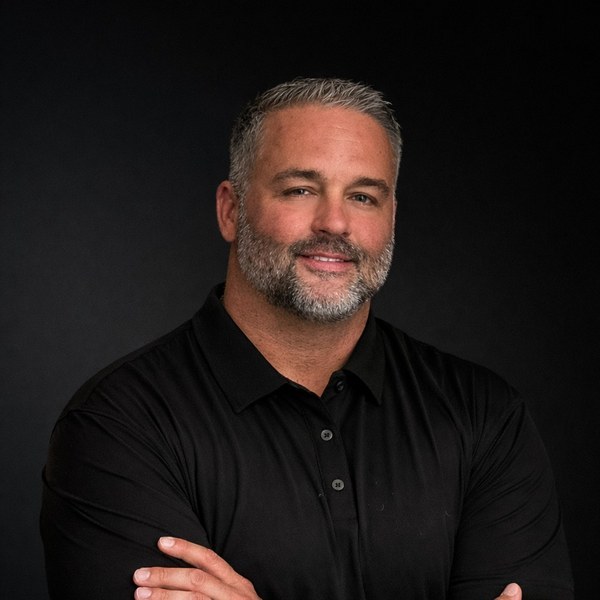
Michael Norman
Relationship Manager, SLATE Financial
National Reach. Personal Partner.
Medicare and insurance support for agents who want to grow.
- 20+ YrsCoaching and Educational Leadership
- 100sRecruited, Mentored and Developed
- Program BuilderTeams, Culture and Winning Relationships
About Me
Hi, I'm Michael Norman, a Relationship Manager at SLATE Financial. I partner with independent Medicare and health insurance agents, as well as agencies, who want more support without giving up their independence.
I work with agents and agency owners nationwide, wherever you are licensed. Whether you're a solo agent or leading a team, my job is simple: help you build a business you're proud of.
I believe the best partnerships start face to face. That's why I host small, relaxed events like Coffee & Connect, brunches and happy hours, where agents and agency leaders can meet, share ideas and see if SLATE is the right fit.
If you're looking for a partner who picks up the phone and shows up for you, book a time on my calendar.
Built for Agents, by Agents
Innovation
Automated tools that save you time and help you grow.
Strategy
Strong carrier relationships and exclusive partnership access.
Leadership
Mentors, not managers. Real guidance for agents and agency owners.
Empowerment
Training and support so you can serve every client with confidence.
Partnership
Industry updates and market intel to keep you ahead.
Culture
A community that shares knowledge and celebrates wins.
No production requirements. You own your book.
See SLATE in Action
Agent Resources
Plain-language guides for licensed agents and agency owners.
Free Guide Library
Fourteen practical guides. Pick any one and get it free.
Already working with me? Grab every resource in one sheet, no sign-up needed.
-
Getting Started
Getting Started Checklist
Licensing, contracting and certification steps to finish before your first appointment.
Get Free Guide: Getting Started Checklist -
Getting Started
Appointment and Contracting Readiness Checklist
What to have ready before you submit contracting, and how to confirm each appointment is active.
Get Free Guide: Appointment and Contracting Readiness Checklist -
Training
New Agent Training Roadmap
What complete training covers, and how to judge any training program.
Get Free Guide: New Agent Training Roadmap -
Marketing and Tools
Lead Generation and Marketing Playbook
Channels you own, questions to ask about lead sources and what compliant outreach looks like.
Get Free Guide: Lead Generation and Marketing Playbook -
Marketing and Tools
Agent Technology Checklist
What to look for in quoting, CRM, enrollment and compliance tools.
Get Free Guide: Agent Technology Checklist -
Compliance
Medicare Marketing Compliance Essentials 2027
Scope of Appointment, the TPMO disclaimer and call recording rules, built into your routine.
Get Free Guide: Medicare Marketing Compliance Essentials 2027 -
Compliance
Compliant Call Script Framework 2027
A step-by-step framework that keeps every required element of a Medicare sales call in order.
Get Free Guide: Compliant Call Script Framework 2027 -
Compliance
Recordkeeping and Document Retention Guide
What records to keep, for how long, and how to store them so you can answer a complaint years later.
Get Free Guide: Recordkeeping and Document Retention Guide -
Uplines
Upline and Partner Evaluation Checklist
Questions to ask any upline or partner, warning signs and a scorecard for agency owners.
Get Free Guide: Upline and Partner Evaluation Checklist -
Uplines
Contract Transfer Guide
Steps for switching uplines cleanly, and how carriers let agents move.
Get Free Guide: Contract Transfer Guide -
Agency Growth
Referral-Building Playbook
How to earn, ask for and receive referrals in a way that follows Medicare marketing rules.
Get Free Guide: Referral-Building Playbook -
Agency Growth
Turning 65 Outreach Playbook
How to reach people approaching Medicare in a helpful, permission-based and compliant way.
Get Free Guide: Turning 65 Outreach Playbook -
Agency Growth
Client Retention and Annual Review Calendar
A year-round service calendar that keeps clients informed and makes the annual review a habit.
Get Free Guide: Client Retention and Annual Review Calendar -
Agency Growth
AEP and OEP Prep Checklist 2027
A month-by-month checklist for the Annual Enrollment Period and the MA Open Enrollment Period.
Get Free Guide: AEP and OEP Prep Checklist 2027
Showing all 14 guides.
Agent Toolkit
Public links that help licensed agents and agencies with licensing, training and everyday work.
Licensing and Compliance
-
NIPR National Producer Number Lookup (opens in a new tab)
Look up an NPN for an individual or an agency.
-
NIPR License Renewal (opens in a new tab)
Start a resident or non-resident license renewal.
-
NAIC State Insurance Department Directory (opens in a new tab)
Find a state insurance department for licensing and rules.
-
CMS Medicare Marketing Guidelines (opens in a new tab)
The Medicare Communications and Marketing Guidelines (MCMG) and related materials from CMS.
-
CMS TPMO Disclaimer Requirements (opens in a new tab)
The current required disclaimer language in 42 CFR 422.2267.
-
FTC National Do Not Call Registry (opens in a new tab)
Telemarketer access to the National Do Not Call Registry.
Certification and Training
-
AHIP Medicare Training (opens in a new tab)
Medicare and Fraud, Waste and Abuse certification used across the industry.
-
Marketplace Agent and Broker Registration (opens in a new tab)
Annual registration and training to sell plans on HealthCare.gov.
-
NIPR Continuing Education Requirements (opens in a new tab)
State continuing education requirements that affect license renewal.
Tools
-
Medicare Plan Finder (opens in a new tab)
Compare Medicare Advantage and Part D plans on Medicare.gov.
-
Medicare Medigap Policy Finder (opens in a new tab)
Compare Medicare Supplement (Medigap) policies by ZIP code.
-
SHIP Locator (opens in a new tab)
Find a State Health Insurance Assistance Program in any state.
-
Help with Medicare Drug Costs (opens in a new tab)
Extra Help and other programs that can lower Part D costs.
External links are provided for convenience; SLATE is not affiliated with these organizations.
Learn the Essentials
Quick reads on each topic. Open a tab to see the key points.
Your Start-Up Checklist
Most onboarding delays come from items you can finish before contracting starts. Work through this list and move from license to ready-to-sell faster.
Before You Contract
- Active resident license, plus non-resident licenses for every state you plan to work. Check them in NIPR.
- Errors and omissions (E&O) coverage. Carriers commonly require it before appointing you.
- AHIP Medicare and Fraud, Waste and Abuse training. It resets every plan year, and each carrier sets its own rules.
- Carrier product certifications on top of AHIP.
- Payment and banking details, ready to go.
- A compliance routine for Scope of Appointment (SOA) forms and call recording.
Your First 30 Days
- Week 1: Contracting is submitted, you have your logins and you know who to call.
- Week 2: Certifications are done and your CRM, quoting and enrollment tools are set up.
- Week 3: Product and compliance training, plus a working SOA, disclaimer and recording workflow.
- Week 4: First appointments with backup, then review what to tighten.
What You Own, and Where SLATE Can Help
- Always yours: your state license and renewals, annual AHIP and carrier exams, E&O coverage and following the rules on every appointment.
- SLATE can help with: contracting paperwork and status follow-up, reminders about what is due, stalled or rejected appointments and questions on compliance, carriers and products.
Choosing Which Carriers to Appoint With
More appointments are not automatically better. Each one adds a certification, a portal and a product set to learn.
- Which plans are offered where your clients live.
- Which products fit the clients you serve.
- Which carriers look stable in your market for the coming year.
What Good Training Covers
Certification teaches the rules. It does not teach you how to build a business. Use this roadmap to see what complete training covers and how to judge any program.
Five Areas Real Training Covers
- Compliance and certification: annual certifications, SOA habits, disclaimer and recording rules.
- Product knowledge: what changed this year and how to explain it plainly.
- Sales skills: appointment flow, discovery, objections and follow-up, with role play and coaching.
- Technology: quoting, CRM, enrollment and document tools you can actually use.
- Case support: a real person who owns the problem when an application stalls.
Beyond the basics, a complete program also covers marketing, personal branding and retention and annual-review systems.
How Training Should Be Delivered
- Live sessions with time for questions.
- Recorded content you can revisit.
- In-person work for deeper skill building.
- One-on-one help when you are stuck.
Plans change every year, so product training has to be continuous.
Your First 90 Days
- Days 1 to 30: contracting, certifications, tools and a compliant appointment workflow.
- Days 31 to 60: weekly role play or call review, steady follow-up on every lead and your first annual-review conversations scheduled.
- Days 61 to 90: track results by lead source, add one owned marketing channel such as referrals and review what to tighten.
Questions to Ask Any Training Program
- What does the first 30 days look like, and who runs it?
- Is training live, recorded or both, and how often?
- Is there help with AHIP and carrier certifications every plan year?
- Which tools are included, and who trains you on them?
- How do you reach case support, and who owns your issue?
- Is there sales and objection training, or only product?
- Are there events where you can learn from experienced agents?
- Can you see the resource library before you commit?
Red Flags
- Training that stops after you are appointed.
- No named contacts, only a general inbox.
- Tools you pay for but never get trained on.
Grow with What You Control
Focus on what you control: channels you own, compliant materials, disciplined testing and tools that save you time.
Channels You Own
- Referrals: ask at natural moments, make it easy, track it and say thank you.
- Turning-65 outreach: referrals, direct mail, social ads and community events. Track each one.
- Online presence: a Google Business Profile and reviews gathered the right way.
- Personal brand: a clear message about who you help, and helpful content.
Adjust to the Lead Source
- Trust: referrals arrive warm, cold leads need more rapport.
- Intent: some prospects are ready to decide, others are just learning.
- Timing: how far a prospect is from 65 changes the conversation.
Before You Buy Leads, Ask
- How are leads generated, and what did the prospect request?
- How was consent for calls and texts collected?
- Are leads exclusive or shared, and with how many agents?
- What is the return policy for bad leads?
Test with a budget you can afford to lose. Track every lead from contact to sale. Stop if the numbers do not work.
Follow-Up Beats Volume
Most leads are lost after they arrive. A CRM with reminders, text and email sequences and a simple booking process often does more than buying more leads.
Judging Any Tool Stack
- Ask for a live demo, not screenshots.
- Confirm what is included and what is a paid add-on.
- Make sure your tools connect so you do not enter data twice.
- Check that training on the tools is provided, not just access.
- Confirm you can export your own client data and recordings.
Core tools to look for: quoting, enrollment, CRM, compliance documentation, policy tracking and reporting.
Three Rules to Build In
You own your compliance on every appointment. Build three rules into your routine and make the right step automatic.
The Three Rules
- Scope of Appointment (SOA): document the products the client agreed to discuss before any personal marketing appointment. The 48-hour wait no longer applies, but the SOA does.
- TPMO disclaimer: required if you do not offer every plan organization in the area. For 2027, deliver it before discussing benefits.
- Call recording: record marketing, sales and enrollment calls in full and keep them at least six years. Audio is kept for the first three years, and a complete transcript is acceptable for years four to six.
Build It Into Your Workflow
- Capture the SOA as part of booking.
- Put the disclaimer script at the top of your call guide.
- Use recording that starts automatically, with secure storage you can search.
Quick Checklist
- SOA documented every time, including inbound calls and walk-ins.
- Discussion kept to the products on the SOA.
- Marketing materials and ads reviewed against CMS rules before use.
- Consent for calls and texts collected properly, and Do Not Call respected.
- No cold calling or unsolicited contact.
Update Your Process Every Year
CMS changes the rules regularly. Before each Annual Enrollment Period (AEP), review what changed and what you need to update. Do not describe a proposed rule to clients as if it already applies. Be ready to retrieve a recording and its documentation quickly if a carrier asks.
Choosing and Switching
The real differences between uplines sit in contract terms, support and tools. Ask these questions of anyone you consider, SLATE included.
What an FMO Does
A field marketing organization (FMO) sits between carriers and independent agents. It handles carrier contracting and appointments, passes along training and materials, and backs agents with tools, marketing help and service.
Ask for Answers in Writing
- How am I paid, and by whom?
- Does anything come out of my pay?
- Are my renewals vested, and what happens if I leave?
- What is your release policy?
- Who sits at the top of my hierarchy?
- What follows me if I leave?
- Who owns my client data, and can I export it?
- How do you support compliance?
- How quickly do contracts get done?
- Which tools do I get, and at what cost?
- Who helps when something goes wrong?
- What training do you offer?
Warning Signs
- Vague answers about releases.
- Leads that create debt you owe.
- No compliance backup.
- Pressure to sell certain products regardless of client fit.
- Silence during AEP.
Six Steps to a Clean Move
- Review what you signed.
- Inventory your carriers.
- Learn each carrier's transfer rule. Many pause transfers in the fall.
- Plan the order with your new upline.
- Request releases in writing and file the paperwork.
- Confirm each new hierarchy and keep writing.
Your license belongs to you. What changes is your position in each carrier's hierarchy.
How Carriers Let Agents Move
- Signed release: usually the fastest, often immediate.
- Period without production: commonly 3 or 6 months.
- Notice of intent: often about 90 days.
Policies vary by carrier and change often. Confirm the current rule before you ask.
Have These Ready
- Your NPN, resident and non-resident licenses and proof of E&O coverage.
- AHIP for the plan year plus each carrier's certification.
- Your current FMO agreement, carrier contracts and writing numbers.
For Agency Owners
Hiring changes what you need from a partner. As an agency you need contracts, training and case help, plus a few things solo agents do not.
What Changes When You Hire
- Team contracting: new agents appointed under your hierarchy quickly and correctly.
- Onboarding: training that gets producers certified and selling without you teaching every session.
- Visibility: reports on who is producing, who is certified and where applications are stuck.
- Retention systems: tools that help your service team keep clients after AEP.
- Clear ownership: a plain understanding of who owns the book and the data.
Escaping the Capacity Trap
Many successful agents get stuck with a strong book, a brutal AEP and no time left to grow. Scaling takes four things.
- Time back: service and admin help.
- People: recruiting, contracting and training producers.
- Marketing: channels that do not depend on you.
- Brand: a reputation that attracts clients and agents.
Score Any Partner From 1 to 5
Ask for demos and examples, not promises, and talk to agency owners who already work with them.
- Technology: quoting, CRM with automation, digital applications, compliance tools and reporting.
- Training: new-agent onboarding and ongoing sales and product training.
- Compliance: annual rule updates and marketing review.
- Operations: fast contracting, case help and clear terms on releases and book ownership.
- Culture: long-tenured people and how struggling agents are supported.
- Focus: depth of expertise in your products and markets.
Extra Questions for Agency Owners
- How do you set up and manage an agency hierarchy?
- How fast can new recruits be contracted and certified?
- What training can my new hires join without me?
- What reporting do I get on production and certifications?
- How are book ownership, releases and client data handled?
- How do you support agents who put client fit first?
Signs a Partner Values You
- Invests in your skills, not just your production.
- Tells you the truth, even when it is bad news.
- Supports doing right by the client.
- Respects your time with tools that cut busywork.
Rules and carrier requirements change, so confirm details with CMS, the carrier or your state insurance department before you advise a client. Not legal or tax advice.
Get Your Free Guide
- Step 1: Enter your details.
- Step 2: Your guide opens right here.
Name and email are required. Phone and NPN are optional.
Tip: use the download icon in the viewer to save it.
We respect your privacy. Want a different guide? Pick it from the list above.
Want a copy later? Contact [email protected].
Upcoming Events
Join me for a small, relaxed get-together for agents and agency owners in your city. Pick your city and RSVP. Dates and venues will be sent to you once they are set.
-
Chandler, AZ
Tue, Nov 17
George & Gather
RSVP for Chandler, AZ -
Atlanta, GA
Dec 1 to 2
RSVP for Atlanta, GA -
San Antonio, TX
Mid-December
RSVP for San Antonio, TX -
Austin, TX
Dec 16 Tentative
True Food
RSVP for Austin, TX -
Houston, TX
Date TBD
RSVP for Houston, TX -
Charlotte, NC
Date TBD
RSVP for Charlotte, NC -
Raleigh, NC
Date TBD
RSVP for Raleigh, NC -
Tempe, AZ
Date TBD
RSVP for Tempe, AZ -
Tucson, AZ
Date TBD
RSVP for Tucson, AZ -
Tampa, FL
Date TBD
RSVP for Tampa, FL -
Orlando, FL
Date TBD
RSVP for Orlando, FL -
The Villages, FL
Date TBD
RSVP for The Villages, FL -
Indianapolis, IN
Date TBD
RSVP for Indianapolis, IN -
Cincinnati, OH
Date TBD
RSVP for Cincinnati, OH -
Columbus, OH
Date TBD
RSVP for Columbus, OH -
Kansas City (Overland Park, KS)
Date TBD
RSVP for Kansas City (Overland Park, KS) -
St. Louis, MO
Date TBD
RSVP for St. Louis, MO -
Nashville, TN
Date TBD
RSVP for Nashville, TN -
Memphis, TN
Date TBD
RSVP for Memphis, TN
Past Events
-
Dallas, TX
Complete
-
Grapevine, TX
Complete
Don't see your city? Tell me where you'd like an event.
Let's Talk
Pick a time that works for you and we'll talk about how SLATE can support your business.